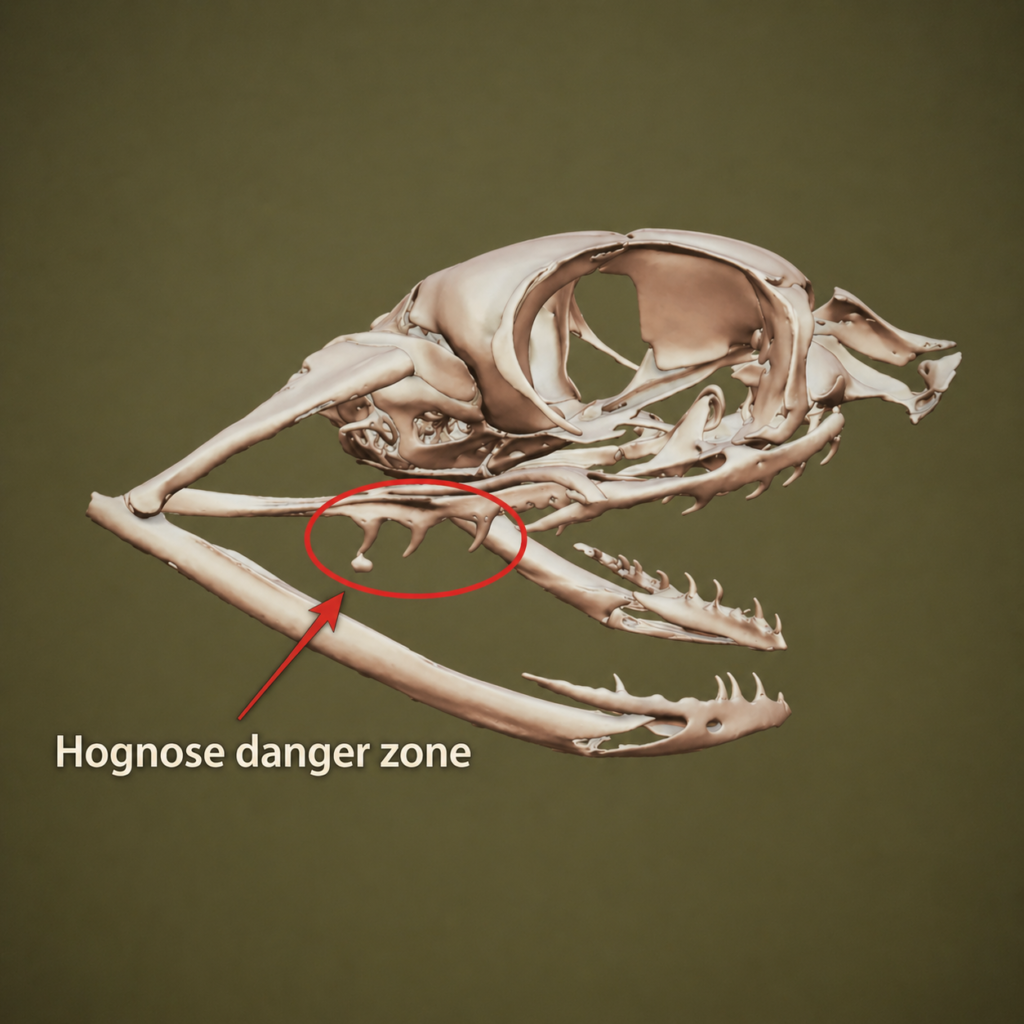
Xenodon pulcher (Tricolor Hognose Snake)
Xenodon pulcher was previously sometimes classified as Lystrophis pulcher. It belongs to a group of South American hognose snakes. Although they look similar to hognose snakes from North America and Madagascar, they are not closely related.
Common names include:
- Tricolor hognose snake
- Banded hognose snake
This species is sometimes confused with Xenodon semicinctus, as they have a very similar appearance.
Description
The tricolor hognose snake is easy to recognize by its upturned snout and striking pattern of white bands edged in black on a red background.
Its coloration mimics venomous coral snakes, helping it scare off predators.
Defensive behavior includes:
- Bluff strikes (fake attacks)
- Flattening the neck
- Jerky, erratic movements
These behaviors make it look more dangerous than it actually is.
Size:
- Females: up to ~60 cm (24 inches)
- Males: ~45–50 cm (18–20 inches)
Lifespan:
- Around 7–8 years
Although they have rear fangs and produce mild venom, it is generally harmless to humans, causing only minor pain or swelling in most cases.
Range & Habitat
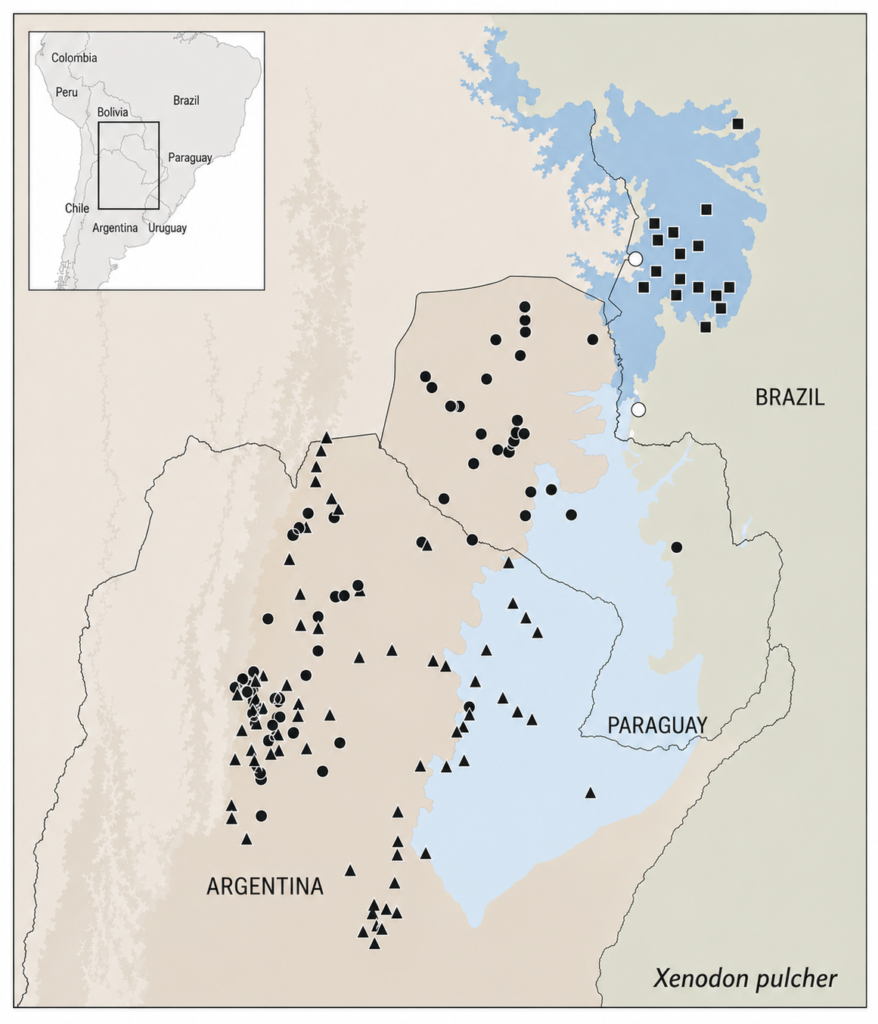
Xenodon pulcher is mainly found in the Chaco region of South America, including:
- Bolivia
- Paraguay
- Northern Argentina
- Possibly parts of Chile and southwestern Brazil
This region is typically dry and sandy, with:
- Scrubland
- Grasslands
- Savannas
They are often found near water sources, as their diet mainly consists of amphibians like frogs.Heterodon nasicus (Western Hognose Snake)
Heterodon nasicus (Western Hognose Snake)
Heterodon nasicus was first described by Spencer Fullerton Baird and Charles Frédéric Girard in 1852. It belongs to the genus Heterodon (hognose snakes) and the colubrid family.
The species is currently classified as Least Concern by the International Union for Conservation of Nature (IUCN), meaning it is not considered threatened.
Description
The western hognose snake is a small, stout-bodied snake, averaging about 50 cm (20 inches) in length.
It is easily recognized by its upturned snout, formed by a pointed scale at the tip of the nose—perfect for digging in loose soil.
Key features:
- Rough, keeled scales
- Head only slightly wider than the neck
- Color varies: brown, greenish, or reddish
- Distinct dark blotches along the body (sometimes faint or reduced)
Range & Habitat
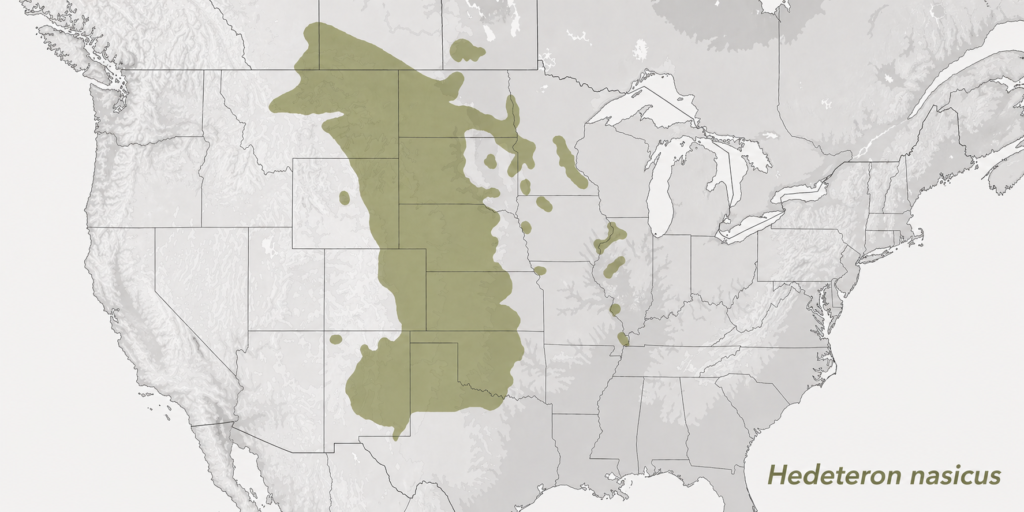
This species is found across central North America, including:
- Southern Canada
- The United States
- Northern and central Mexico
There are also isolated populations further east, such as in Illinois and eastern Missouri.
Habitat preferences:
- Sandy or loose soils
- Prairies
- Shrublands
- Open woodlands
- Semi-deserts
- Lightly farmed agricultural land
It can be found from lowlands up to elevations of about 2,440 meters (8,000 feet).
Behavior & Diet
Western hognose snakes are excellent burrowers and often rest in:
- Self-dug burrows
- Abandoned animal burrows
Diet includes:
- Amphibians (especially toads)
- Lizards
- Small birds
- Small mammals
They are believed to be resistant to toad toxins, which allows them to prey on animals many predators avoid. Since toads inflate their bodies when threatened, this snake has flexible jaws that help it swallow such prey.
Reproduction
Females lay 4–23 eggs per clutch (typically around 10).
The eggs are usually deposited in burrows or underground chambers.
Subspecies
The species is divided into three subspecies:
Heterodon nasicus nasicus
Heterodon nasicus gloydi
Heterodon nasicus kennerlyi